


If you have managed to secure an oral for either of the two conveyancing exam papers, it means one important thing: you were close. That in itself is something to be proud of.
Candidates who achieve between 40% and 49% in the written examination qualify for an oral.
This is not a failure, but a second opportunity.
The oral mechanism exists to determine whether your written mark truly reflects your competence. It may very well be that you achieved a mark that does not necessarily reflect your competency. Various factors may have influenced your ability to properly pen down what you have learned in preparation for the written exam.
As someone who has gone through this process, I can say this with confidence: the oral is far less intimidating than it seems, provided you understand what is expected of you and that you prepare properly.
1. How to prepare for an oral exam (broadly)
Preparation for an oral exam is fundamentally different from preparing for a written exam. You are no longer preparing to write — you are preparing to explain. This mental shift is critical.
When preparing, you should focus on:
- Understanding rather than memorising.
- Being able to explain conveyancing concepts clearly and simply.
- Identifying weak areas from the written exam that you can improve upon in the oral exam.
A useful approach is to imagine you are teaching or explaining the content to a layperson.
If you battle to explain a concept out loud in a clear and structured manner, you likely do not understand it well enough for the oral. It is important to understand that the examiners are not looking for perfection. They are assessing whether you have a sufficient grasp of the principles to be admitted to practise as a conveyancer.
2. How to approach studying for the conveyancing oral
Given that you have attempted the written exam, it should not be necessary for you to re-study the entire syllabus from scratch. That approach will likely be inefficient and unnecessary.
Instead, adopt a targeted and strategic review process:
Revisit your written exam
- Identify where you lost marks and which questions you struggled to answer comprehensively.
- Ask yourself how you would explain those answers verbally.
Practice speaking your answers
- Do not just read your notes. Speak them out loud.
- Focus on keeping answers structured: start with the principle, expand with explanation, and add a practical example (if you have time). Practical examples are often a helpful tool to demonstrate to the examiners that you understand how a specific principle operates in practice.
Depth of understanding is critical
- You must know and understand the theory thoroughly. Do not assume that you will not be tested on theory simply because it is an oral exam. Examiners regularly ask direct theory-based questions.
3. What to expect on the day of the oral exam
For many candidates, uncertainty about the process is the biggest source of anxiety. Knowing what to expect will reduce that anxiety significantly.
The setting
- You will typically be examined by two examiners. One is usually a Legal Practice Council (LPC) examiner, and the other is often a practising conveyancer, bringing practical insight to the process.
- The environment is formal, often similar to a boardroom or small hearing venue (in some instances, the oral examination may be conducted virtually).
If the oral is conducted virtually
- Ensure you have a stable internet connection. Test your camera and microphone beforehand.
- Choose a quiet, professional-looking environment. Take note of your background and blur it if necessary.
- Log in early to avoid last-minute technical stress.
- Treat the virtual setting with the same level of professionalism as an in-person exam.
The format
- Questions are often directly linked to your written paper, particularly areas where you lost marks.
- You will also be asked general theoretical and practical questions.
What the examiners are doing
- They are assessing your understanding and competence.
- Amongst other things, they are looking to see whether you can correct mistakes from your written exam.
- The presence of a practising conveyancer means there is often a strong practical focus on the questioning.
- They are not trying to trick or intimidate you.
4. What type of questions can you expect?
The questions are generally practical, principle-based, and often tailored to your answers in the written exam. The examiners will often sketch a practical scenario and determine whether you understand how to deal with that scenario from a conveyancing point of view.
You can expect the following:
- Questions based on errors or weak areas in your written exam.
- Core conveyancing concepts (Deeds of Transfer, Servitudes, Estate transfers, Bonds, CRTs & Endorsements).
- Scenario-based questions.
- Questions relating to Deeds Office procedure and practice.
The involvement of a practising conveyancer often means that questions are framed in a real-world, practical context.
5. How to answer questions effectively
Your delivery matters just as much as your knowledge. A well-structured answer will be more convincing.
A simple answering technique
- Start with the tested legal principle.
- Expand with a brief explanation.
- Apply it to the scenario (if relevant).
Additional tips
- Speak clearly and at a measured pace.
- Do not rush your answer. Pause briefly to structure your thoughts before answering.
- If you do not understand the question, ask for clarification.
Silence while thinking is far better than speaking without structure.
6. Should you “spot” when studying?
Spotting is, and will always be, risky. While it may have some value in written exam preparation, it is far less effective for orals. The oral exam may test your overall understanding of the field.
Instead of spotting, it is important to be prepared for a broad range of questions. Ensure you know and understand the applicable Acts.
7. Common mistakes to avoid
- Overcomplicating simple answers.
- Speaking without structure.
- Focusing on obscure details instead of the gist of the question.
8. Managing nerves before and during the oral
Nerves are normal. Even experienced practitioners feel pressure in an oral setting. What matters most is how you manage it.
Before the exam
- Prepare thoroughly — confidence comes from preparation.
- Avoid last-minute cramming on the morning of the exam.
- Get adequate rest the night before.
Practical tips to calm your nerves
- Arrive early and familiarise yourself with the environment.
- If you feel the need to have a final look at your notes, limit yourself to a specific section or a specific principle. Do not try to re-study a bunch of work. You will simply confuse yourself.
- Constantly remind yourself: you are already very close to passing. The only thing you need to do is to demonstrate your competence to the examiners.
9. Additional practical tips
- If you struggle to formulate an answer verbally, ask for a piece of blank paper and a pen.
- Do not be afraid to clarify a question if it is ambiguous or could have more than one interpretation. This may also give you some time to think.
- Familiarise yourself with the Deeds Office — even a basic walk-through can boost confidence and understanding. This is very important.
- Take your time when answering and do not feel pressured to respond immediately.
- Importantly, go through your written paper again and understand exactly where you went wrong.
Perhaps most importantly, do not underestimate how much the examiners want to see you demonstrate your competence and reach your goals.
10. Helpful resources and forums
- A visit to the Deeds Office, and the Gawie le Roux conveyancing notes are all you need to pass this exam. Make sure you study them properly.
- Interrogate and understand where you went wrong in your written exam.
Final thoughts
The oral exam is not designed to catch you out; it is designed to give you another opportunity to demonstrate that you are competent. You already have an established conveyancing foundation; otherwise, you would not be there.
You are closer than you think. The oral is simply your opportunity to prove it.
About the author
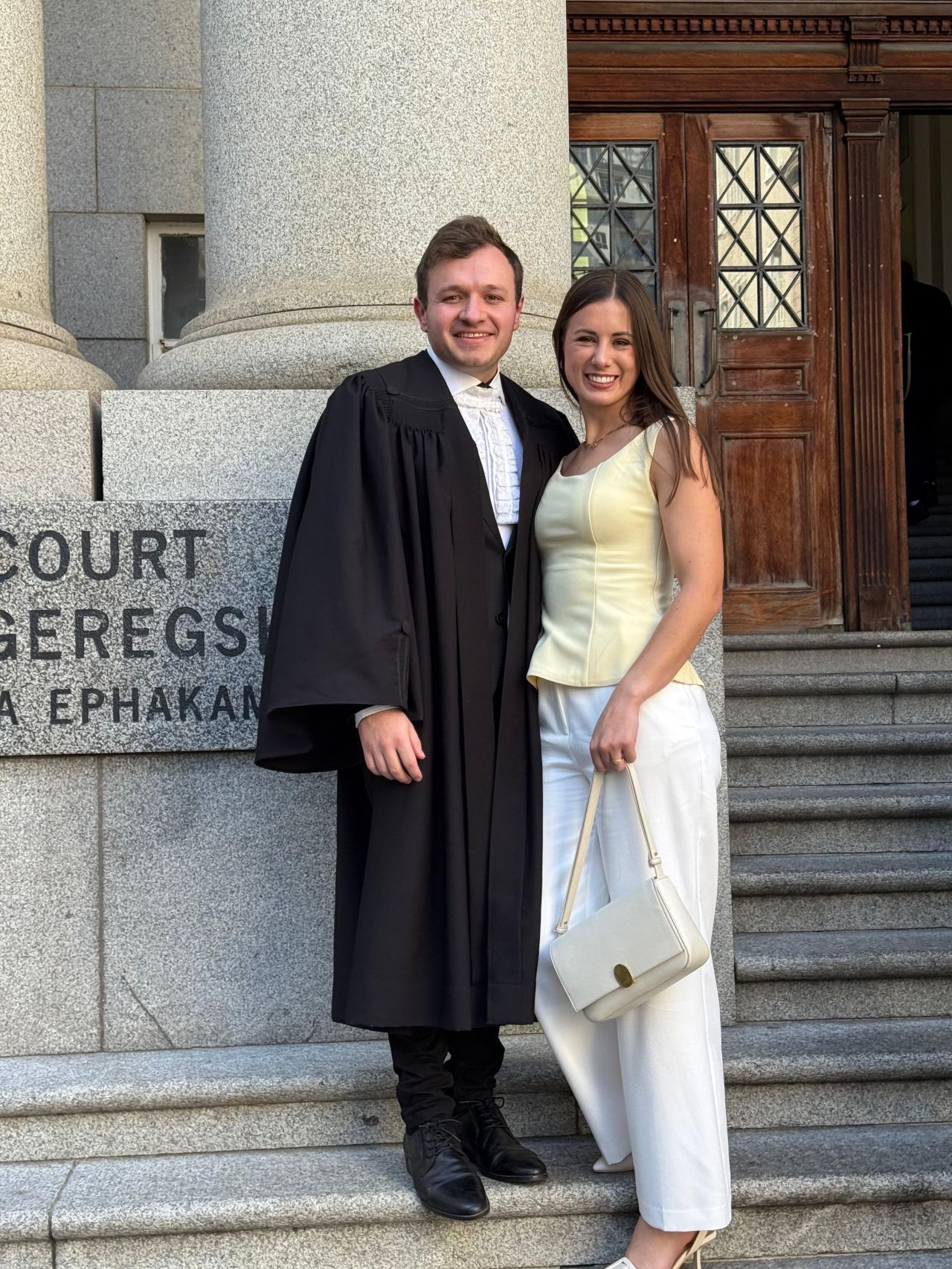
Francois Malherbe is an attorney, conveyancer, and notary at MHI Attorneys in Cape Town.
Last updated on 21 April 2026.