


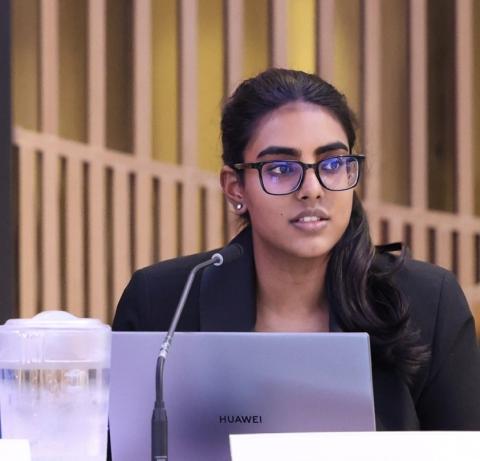
About Theshaya
"I am a PhD (Law) candidate at the University of KwaZulu-Natal, where my research looks at the ethical and legal implications of neurotechnology in the South African criminal justice system. I hold an LLM in medical law, an LLB (cum laude), and a Bachelor of Social Science (cum laude) in law, criminology, and forensic sciences.
I am currently seeking articles for 2026/2027, and I am most interested in corporate and commercial law, medical law, and TMT."
On enrolling at the Gawie le Roux Institute of Law
"In 2025, I travelled extensively for international conferences, often every month or every other month. Flexibility was therefore essential. One of the key reasons I chose the GLR PVT School was that recordings were available, which allowed me to keep up with the programme while travelling.
Reputation also played a significant role. GLR has a long-standing history of over 30 years, and every review I encountered was consistently positive. That track record gave me confidence that I was enrolling with an institution that truly understands legal training and professional preparation. I also researched the lecturers in advance and was impressed by their standing in the profession. These were individuals who were already highly accomplished people who had practised, specialised, and excelled at the very level we are aspiring to reach."
"I firmly believe that if you want to be the best, you need to learn from the best, and that is precisely what the GLR programme offered."
"One example that stood out was in criminal procedure and advocacy, where one of our lecturers was a co-chair of the Legal Practice Council. We were taught by decision-makers and leaders in the profession—people who had worked exceptionally hard to achieve their success. That level of exposure was invaluable."
On placing fourth as a top achiever in her cohort
"The incentive structure also mattered to me. The voucher for top achievers was a meaningful motivator, especially knowing that board exam notes are a significant expense. It encouraged excellence and rewarded commitment, which I appreciated."
400-hour vs 150-hour PVT programme of structured course work
"I completed my LLB in 2022 and moved straight into academia. By the time I enrolled for the PVT programme, it had been about three years since I last engaged with core legal content practically. I wanted a proper refresher before writing board exams—one that went beyond memorisation and allowed me to truly understand legal processes and how the law works in practice. My LLB was primarily completed during the COVID-19 pandemic, so much of my learning was conducted remotely.
The 400-hour programme allowed me to re-engage meaningfully with the law, enjoy the content again, and build a solid practical foundation. The programme is incredibly comprehensive, and that depth is what made the difference for me. Another critical factor was that the 400-hour programme potentially shortens the period of articles. My goal is to become an admitted attorney, and this programme offered a faster, more structured route to that goal. I can honestly say that enrolling in the 400-hour programme was the best investment I have ever made in my career. The content, the notes, and the overall structure of the programme were exceptional, and I genuinely enjoyed every part of it."
On facing challenges
"I enjoy challenges and being pushed outside of my comfort zone, so professionally, I embraced the demands of the programme. Personally, however, there were circumstances beyond my control. My mother is a single parent, and there were financial challenges during this period. I did not have funding for my PhD, which added pressure to my already demanding academic and professional commitments.
That said, the reason I can perform at a high level is because of my mother’s sacrifices and her belief in what I am trying to achieve. She trusts that there is a greater purpose behind my work and that support has allowed me, in most instances, to focus entirely on excelling."
"Her strength and resilience gave me the grounding I needed to keep going, even when things felt overwhelming."
Theshaya's tips for PVT students
"My most significant piece of advice is to truly engage with the content. The 400-hour programme is an investment, and to derive real value from it, you need to fully engage in the learning process. What sets this programme apart is that it teaches the law from a practical perspective, not just a testing one. It helps you understand processes, systems, and how things actually work in practice. Ask questions during lectures, interact with the material, and take full advantage of the lecturers’ expertise.
The lectures are excellent, and there is real value in being curious and involved. If you approach the programme with commitment and intention, you will not only perform well academically but also gain a much deeper understanding of the profession you are entering."
Asking hard questions
"My PhD examines the legal and ethical implications of neurotechnology within the South African criminal justice system. The research interrogates how emerging neurotechnologies—such as brain-based evidence and neuro-interventions—may be introduced across different stages of the criminal justice process, from investigation and trial to sentencing and rehabilitation.
At its core, the study asks hard questions about constitutional boundaries. It explores admissibility, fairness, dignity, privacy, and cognitive liberty, while critically assessing the risk of scientific authority being overstated in legal decision-making. These concerns are examined within South Africa’s unique socio-legal context, where inequality, systemic bias, and historical injustice heighten the consequences of technological misuse. Rather than assuming technological progress is inherently beneficial, my research focuses on whether these tools should be used at all, under what conditions, and with what safeguards.
The aim is to develop a principled legal framework that ensures innovation does not undermine constitutional rights, due process, or human dignity, while providing guidance for courts and policymakers who confront technologies advancing faster than the law itself."
A final note
You can connect with Theshaya on LinkedIn or via theshaya1826 gmail.com (email).
Last updated on 6 January 2026.